School emergencies often strike without warning. It could be a student falling in the gym, a teacher suffering an asthma attack during a lesson, or a stranger appearing in an unauthorized area. In such situations, the outcome hinges not on what a camera captures, but on whether a distress signal reaches the right people and the right location quickly enough.
Many people imagine this to be simply an emergency button. In reality, that is merely the most visible part; the entire system consists of three components working in coordination.
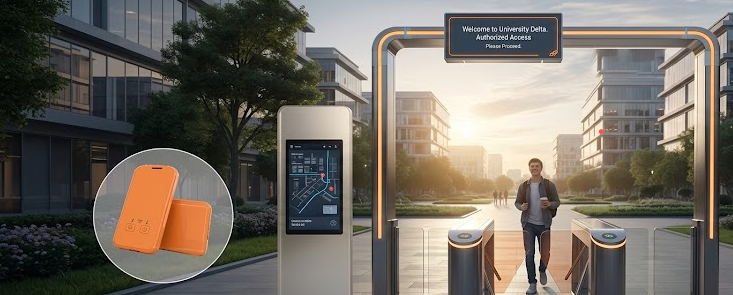
The first component is the activation device. This takes the form of a wearable personal tag or a fixed-mount button, allowing teachers, staff, or students to send a distress signal with a single touch without needing to unlock a phone or look up a number.
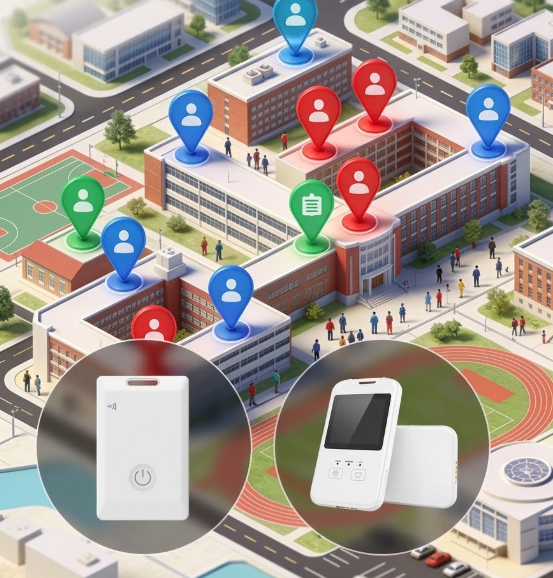
The second component is indoor positioning an often-overlooked aspect that nonetheless determines actual response speed. GPS is virtually useless inside multi-story buildings such as laboratories, libraries, or lecture halls, as satellite signals are blocked or subject to positional errors of tens of meters. The system employs Bluetooth positioning technology to pinpoint exactly which room and floor the person triggering the alert is on, rather than merely indicating a general location within the campus.
The third component is the reception and coordination center. Signals and location data are instantly transmitted to the school's management system, enabling security or medical personnel to know exactly where to dispatch staff and what equipment to bring.
Together, these three components provide an additional layer of protection to complement existing cameras and security personnel, rather than replacing them. While cameras can monitor events, they cannot take action on their own. The button allows individuals to actively summon help the moment it is needed, even in blind spots not covered by the cameras.
In a state of panic, people lose the ability to perform intricate actions such as unlocking a screen, locating an app, or dialing a phone number. That is why procedures relying on calling security personnel often take much longer than anticipated—especially when the person in distress is injured or unable to speak.
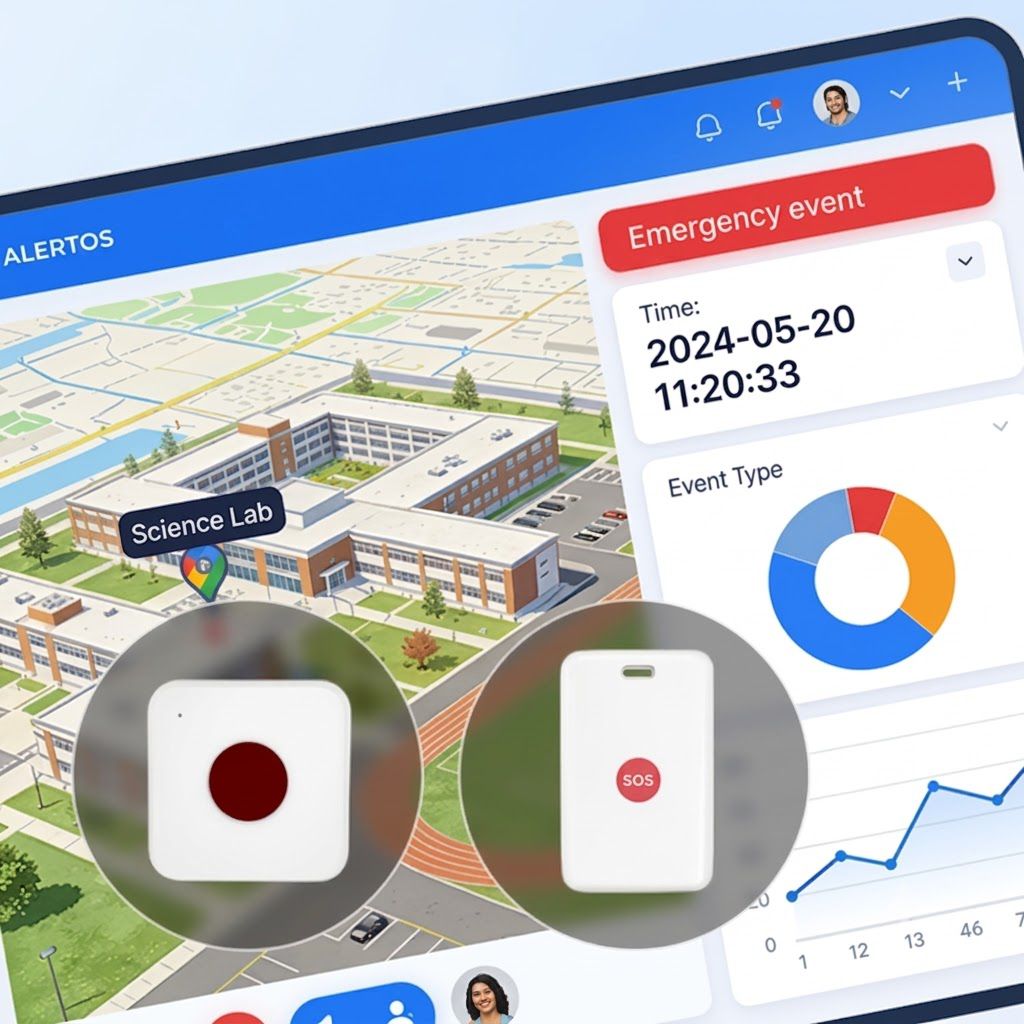
The physical button on the wearable tag addresses this exact issue through an almost instinctive action—a tap or a light press—that requires neither visual contact nor precision. In situations such as detecting an intruder, the ability to activate the alarm silently is even more critical than speed, as pulling out a phone to make a call could easily alert the intruder and prompt them to react first.
+ Medical emergencies: a student fainting, or a teacher suffering a heart attack or asthma attack during class.
In all the aforementioned scenarios, the workflow remains the same: a single touch triggers the system to pinpoint the location, and the signal—along with a location map—is immediately transmitted to the responsible personnel, eliminating the need to wait for a verbal description of an incident occurring somewhere near Zone B.
This should not be viewed merely as a standalone technological product, but rather as a shift in how schools manage safety—moving from a reactive stance of waiting to detect issues to a proactive approach that empowers individuals to raise an alarm the moment it is needed. Knowing that a fast, reliable means of calling for help is always available not only shortens response times but also alleviates anxiety within the daily learning environment—an intangible yet vital benefit that directly impacts the quality of teaching and learning.
This solution is part of IKAM’s ecosystem of school safety solutions; it is designed to be deployed alongside other on-campus monitoring systems, providing schools with a unified safety operations platform rather than a collection of disjointed tools.