A university or research institute is rarely a closed environment. Every day sees a steady stream of visitors: foreign experts arriving for exchanges, partners coming to sign agreements, and parents visiting their children. Such activity is both normal and essential for an open academic environment. Yet, this very openness creates a blind spot that often goes unnoticed: unlike internal staff, visitors are unfamiliar with the campus layout and emergency exits, lack the skills to handle laboratory incidents, and can easily—and inadvertently stray into restricted areas, such as research equipment storage rooms or specialized teaching zones.
The visitor logbook at the security gate long the most common tool for managing guests proves virtually useless precisely when it is needed most. In the event of an emergency, the school cannot even answer the simplest questions: how many visitors are currently on the premises and where they are located, information essential for timely rescue efforts.
The solution begins with something very specific: a smart visitor card equipped with tracking capabilities. However, if it stopped at simply issuing cards for visitors to swipe at the gate, the solution would be no different from the old paper logbook merely digitized. What truly sets it apart is the way IKAM collaborate to manage the operations behind that card.
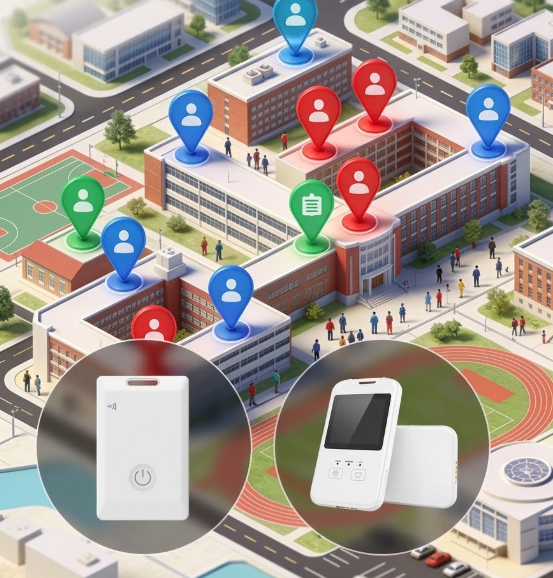
The infrastructure behind each visitor pass transforms it into more than just an access card; it becomes an active connection point within the campus's sensor and positioning network. In an emergency, the system proactively pinpoints locations, analyzes movement patterns, and issues tailored evacuation instructions for visitor groups rather than applying the same evacuation protocol used for internal staff who are already familiar with the layout.
Using the IKAM platform, guest itinerary data is stored in the system's shared knowledge base. This is not a static repository but a dynamic dataset that is continuously cross-referenced and analyzed to identify risk patterns, thereby automatically fine-tuning alert scenarios whenever a guest deviates from their registered route.
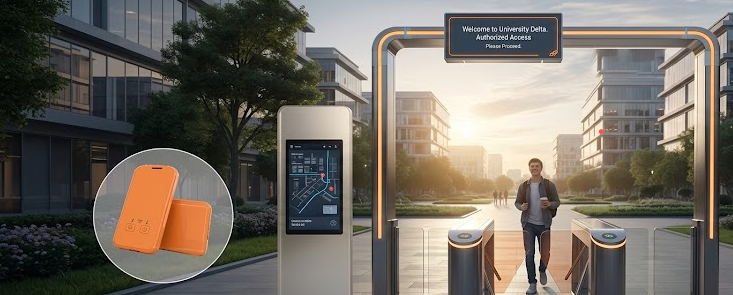
Upon guest check-in at the gate, IKAM’s visitor management system issues a tracking tag while simultaneously logging the visit's purpose and the visitor's authorized access areas into the database. This single action instantly creates a digital profile for each individual moving within the premises, replacing the hard-to-search handwritten records used previously.
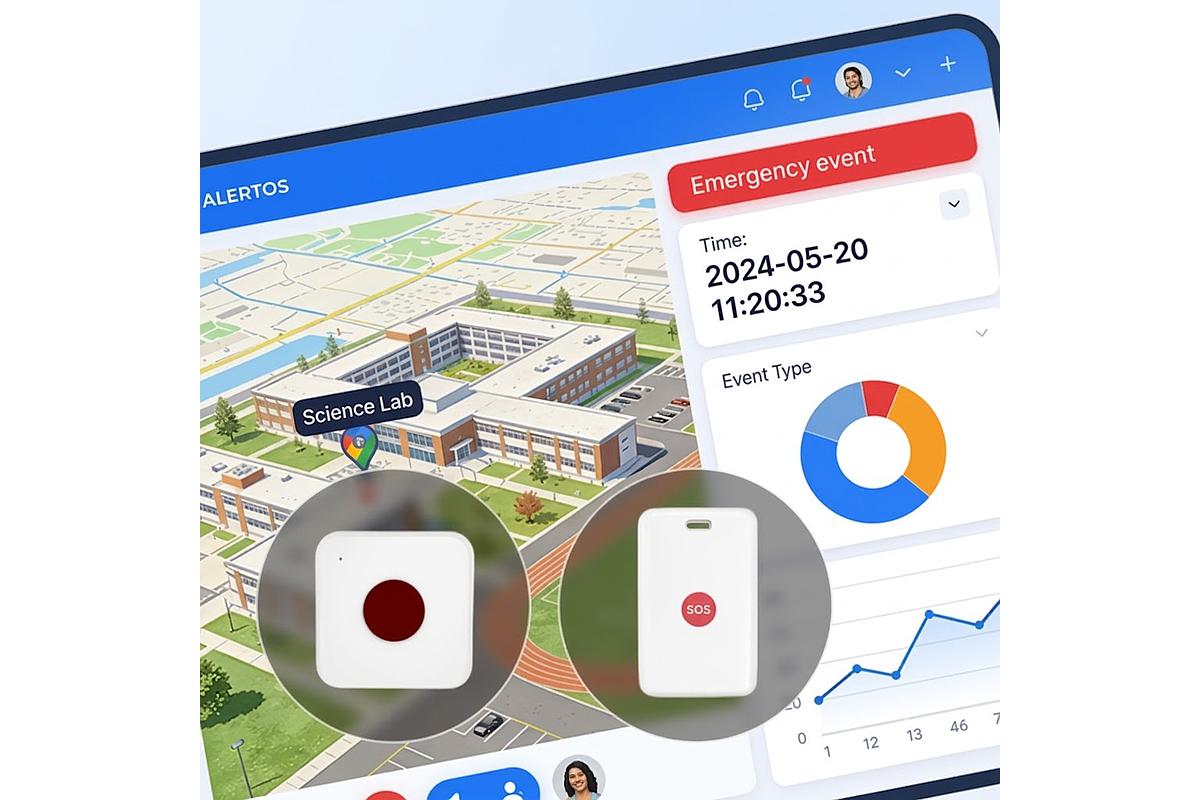
Throughout the visitor's time on campus, the system monitors their movements in real-time. Should a visitor unexpectedly enter a restricted area or a specialized teaching zone outside their approved itinerary, IKAM’s analytical model detects this anomaly and immediately issues an early warning to security personnel. This allows them to intervene before the situation escalates, rather than discovering the issue only after the fact.
In the event of a truly serious incident such as a fire, chemical leak, or security threat—the infrastructure immediately scans the location data of all active visitor tags on the premises. Since the system knows exactly where visitors are located, evacuation instructions are sent specifically to the screens or public address devices nearest to those areas. If a group of visitors is isolated in a laboratory, they receive exit instructions tailored to their specific location, rather than a generic, campus-wide announcement.
The benefits of the solution extend beyond the moment a visitor leaves the gate. The visitor's complete movement log is stored as standardized data, serving to assess school safety infrastructure and providing a reference for security or legal verification when needed.
For research institutes with intellectual property requiring protection, establishing virtual geofences around key laboratories virtually eliminates the risk of visitors whether inadvertently or intentionally accessing areas housing core research equipment and data, a risk that traditional sign-in logs could never effectively manage.
Quản lý khách ra vào không còn là một thủ tục hành chính ở cổng trường, mà trở thành một lớp dữ liệu sống, kết nối trực tiếp với năng lực ứng phó khẩn cấp và bảo vệ tài sản của cả trường học lẫn viện nghiên cứu.