In most schools today, attendance tracking, security, and visitor management operate as separate systems or processes with virtually no data integration. Consequently, the school only becomes aware of an incident after it has already occurred—or even escalated. Across sprawling campuses featuring multiple buildings, laboratories, and dormitories, the gaps between these disconnected systems create information blind spots that the school cannot effectively monitor or control.
IKAM’s real-time monitoring and proactive safety management solution integrates location data, attendance tracking, visitor management, and emergency alerts into a single platform, effectively eliminating operational blind spots that previously existed when these functions operated in isolation.
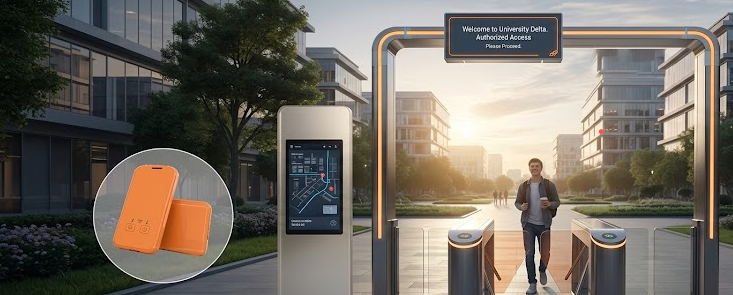
The first pillar is input data. Smart staff and student cards serve the dual purpose of attendance tracking and identity verification; when integrated with the visitor management system, they ensure that everyone on campus whether students, teachers, or external guests is transparently recorded and monitored.
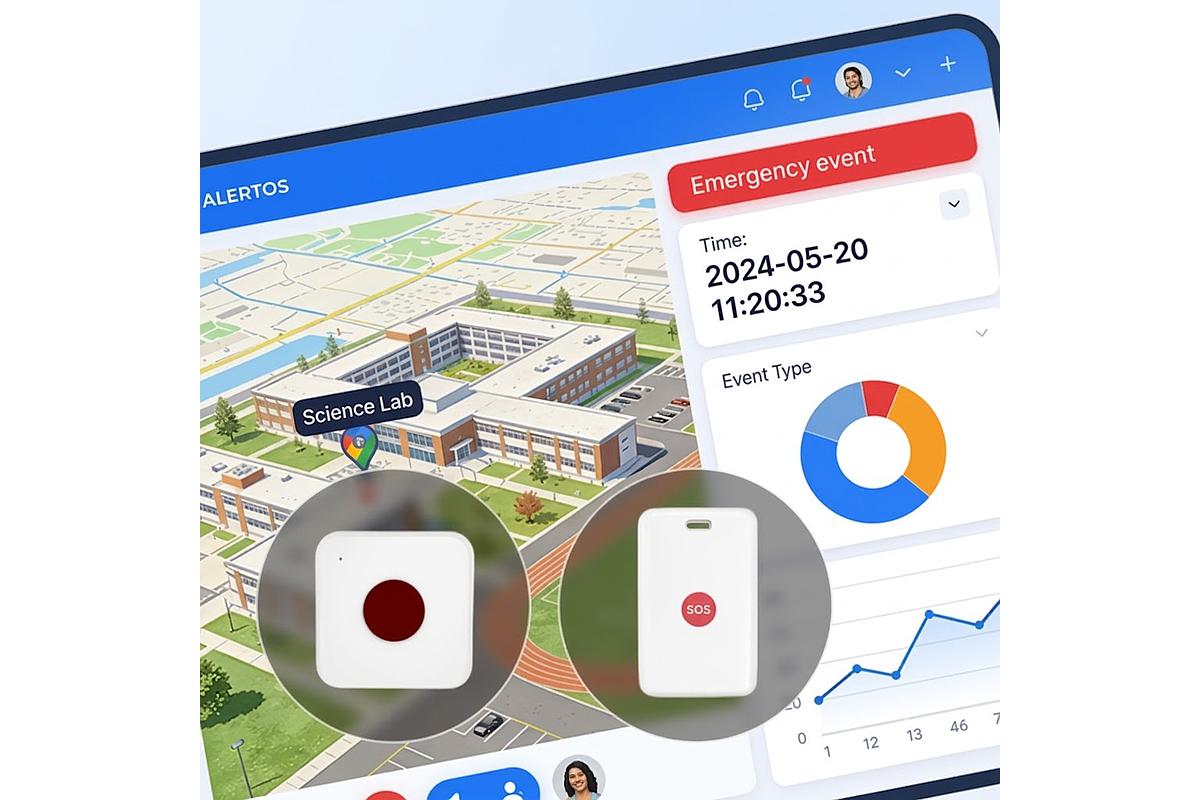
The second pillar is proactive monitoring. The system displays real-time campus-wide positioning, indicating the specific building, floor, and area where students and staff are located whether they are moving between classes, participating in extracurricular activities, or staying in the dormitories. This is complemented by heat maps that visually highlight areas with high crowd density or unusual movement patterns, enabling the school to detect signs of potential trouble before an actual incident occurs.
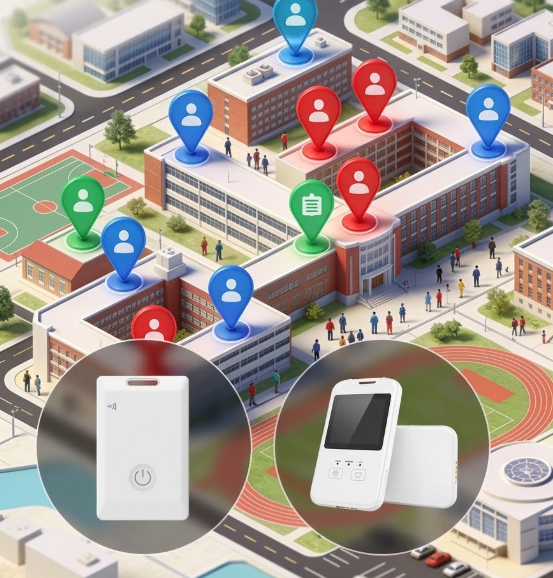
The third pillar is emergency response, comprising an emergency alert button that allows teachers or students to instantly summon help while transmitting their precise location, as well as the strategic positioning of rescue equipment such as fire extinguishers and medical kits so that no time is wasted searching for them when needed.
These three components are tightly integrated. Data from attendance tracking and positioning feeds the heat map, which in turn supports security coordination; meanwhile, the emergency alert system leverages that same positioning layer to pinpoint the location of individuals requiring assistance. This is why it constitutes a self-contained ecosystem rather than a mere collection of disparate tools.
When it comes to school security, the biggest challenge is not a lack of equipment, but a shortage of personnel to monitor every corner simultaneously. Security guards patrol according to fixed schedules, yet actual risks arise without following any schedule at all.
Heat maps effectively address this gap. Security teams can view the map to identify areas experiencing sudden spikes in crowd density or unusual movement patterns, allowing them to dispatch personnel directly to the specific locations requiring attention rather than conducting broad, generalized patrols across the campus. For high-risk areas such as chemical laboratories, server rooms, or storage facilities the system also implements access control zones. If an unauthorized student enters one of these areas, an alert is triggered immediately, eliminating the need to wait for a retrospective review of camera footage.
A common mistake when investing in a safety system is viewing it merely as a precautionary expense that is only relevant when an incident occurs. In reality, this solution directly supports the school's daily operations.
Automated card-based attendance tracking reduces the time spent at the start of class. This data feeds directly into the safety system, allowing the school to know exactly how many people are in each room or area at any given moment. Monitoring the location of emergency equipment also enables the early detection of fire extinguishers or medical kits that have been moved out of place or obstructed a minor operational issue that could lead to serious consequences if not identified promptly.
Overall, the solution enables the school to respond more rapidly to incidents while establishing a transparent monitoring and management platform for daily operations aligning with the goals of a smart educational campus.