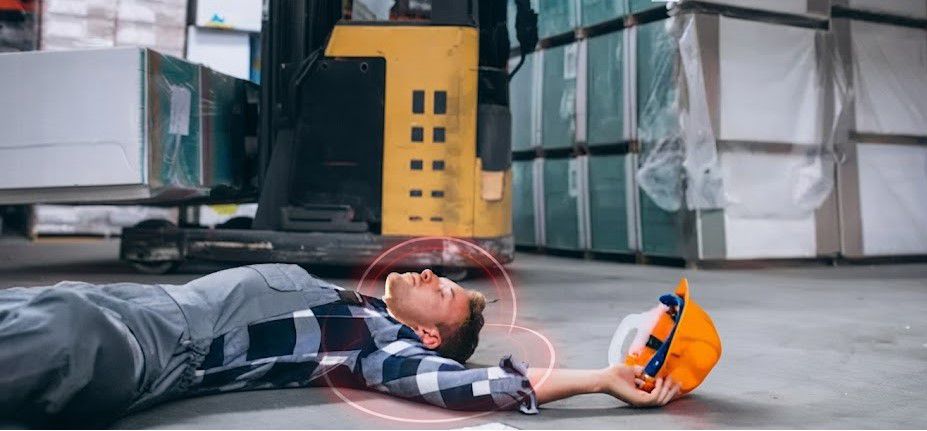
A worker suffers a fall in a bulk material loading zone, unnoticed until the shift leader takes roll call hours later. This is not a rare occurrence in large-scale industrial plants, where personnel move continuously across production floors, warehouses, and high-risk zones such as chemical storage or heavy machinery areas. CCTV cameras record the incident, but recording is not equivalent to real-time detection, as dedicated security personnel cannot monitor dozens of video feeds simultaneously throughout an entire shift.
IKAM deploys personnel safety monitoring solutions based on wearable tracking devices, enabling plant managers to track worker locations in real time and receive instant emergency alerts, eliminating reactive responses after damage has occurred.
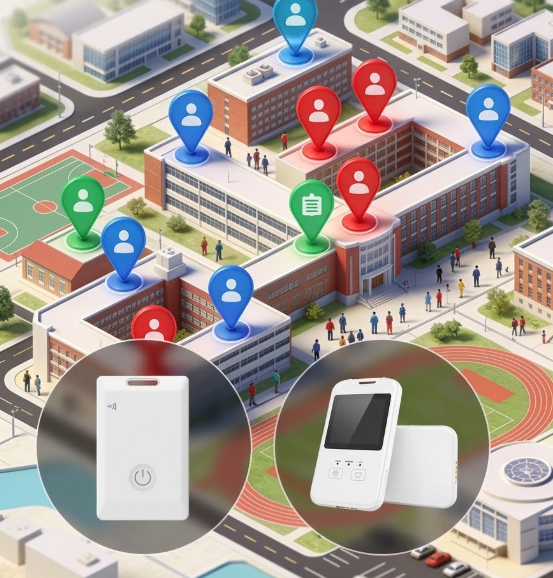
In multi-story indoor environments constructed with dense concrete and structural steel, standard GPS signals suffer severe attenuation. Bluetooth Low Energy (BLE) positioning solutions utilize wearable beacons broadcasting signals to fixed gateway scanners deployed across production zones. This architecture achieves location accuracy within 3 to 5 meters for hard-hat clip tags, and 1 to 3 meters for dedicated badge-type tracking tags.
This level of precision is sufficient to identify a worker's exact zone, building, and floor level, though it is not designed for sub-meter pin-pointing. For ultra-high precision applications, next-generation tracking tags integrate Bluetooth Phase-Based Ranging (PBR) technology to achieve centimeter-level accuracy, though this remains an emerging deployment standard.
Form factor selection depends directly on site operational workflows. For personnel required to wear safety helmets throughout their shift, helmet-mounted tracking tags provide a seamless solution—eliminating extra items to carry or forget. These curved tags contour flush against helmet surfaces, weighing only a few grams to prevent ergonomics issues, while achieving multi-year battery lifespans thanks to ultra-low BLE power consumption.
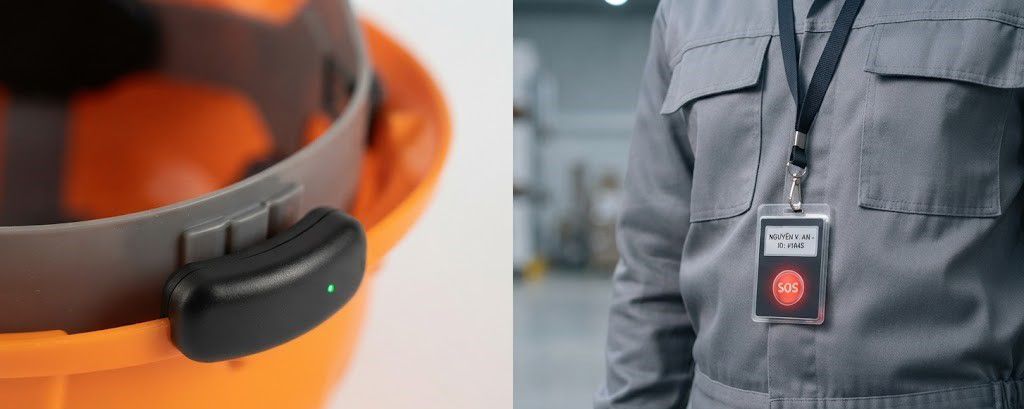
For personnel operating across expansive outdoor yards, moving between multiple facilities, or traveling beyond plant perimeters, LoRaWAN-enabled badge tags are more suitable. LoRaWAN gateways deliver long-range coverage spanning several kilometers with minimal infrastructure, eliminating dense indoor gateway deployments. These hybrid badges feature automatic fallback between outdoor GNSS/GPS positioning and indoor BLE tracking, ensuring continuous visibility as workers transition between indoor and outdoor environments.
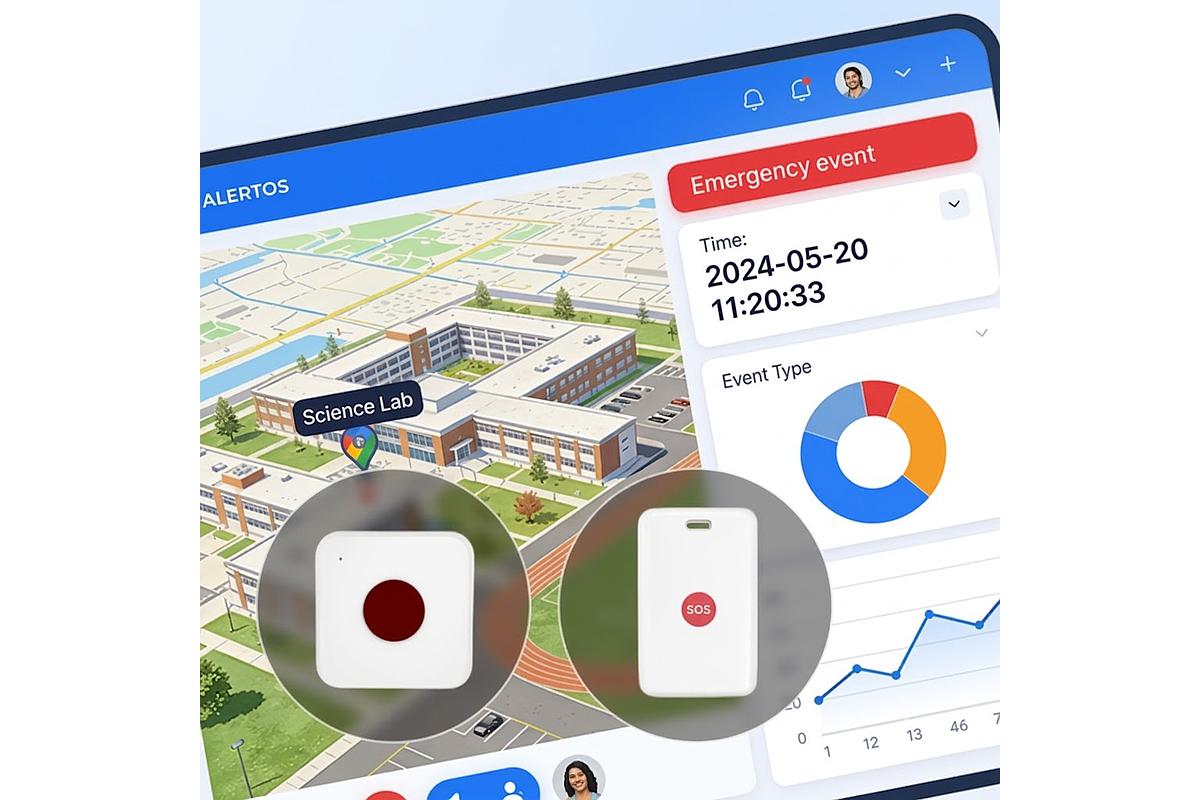
When a worker depresses the emergency SOS button, the wearable device instantly transmits an alert signal accompanied by real-time coordinates to the central command dashboard. Simultaneously, the device provides haptic vibration feedback to notify the worker that their distress request has been successfully registered—a critical feature in noisy industrial environments where display screens are not viewable.
Select wearable models feature continuous distress beaconing, maintaining active SOS transmissions until acknowledged by dispatch personnel. This prevents missed alerts in weak signal zones or unmonitored windows. Evaluating continuous alert capabilities is vital during hardware selection, as sustained distress signals directly dictate emergency rescue response times across large facility footprints.
Beyond real-time positioning and SOS alerts, the system allows safety administrators to configure virtual geofences around hazardous zones, such as chemical bays, active heavy machinery areas, or active construction sites. If unauthorized personnel cross a geofenced boundary, instant alerts trigger at the supervisor dashboard, while onboard LED strips on the worker's badge flash to provide direct visual warnings to the intruder.
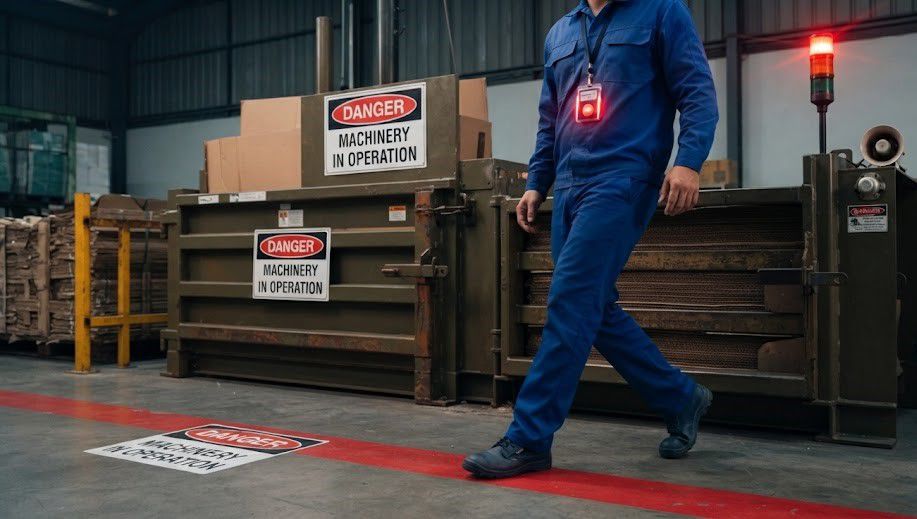
This mechanism transforms industrial safety management from passive signage reliance into an active monitoring framework that detects safety breaches in real time, eliminating delays associated with manual visual supervision.