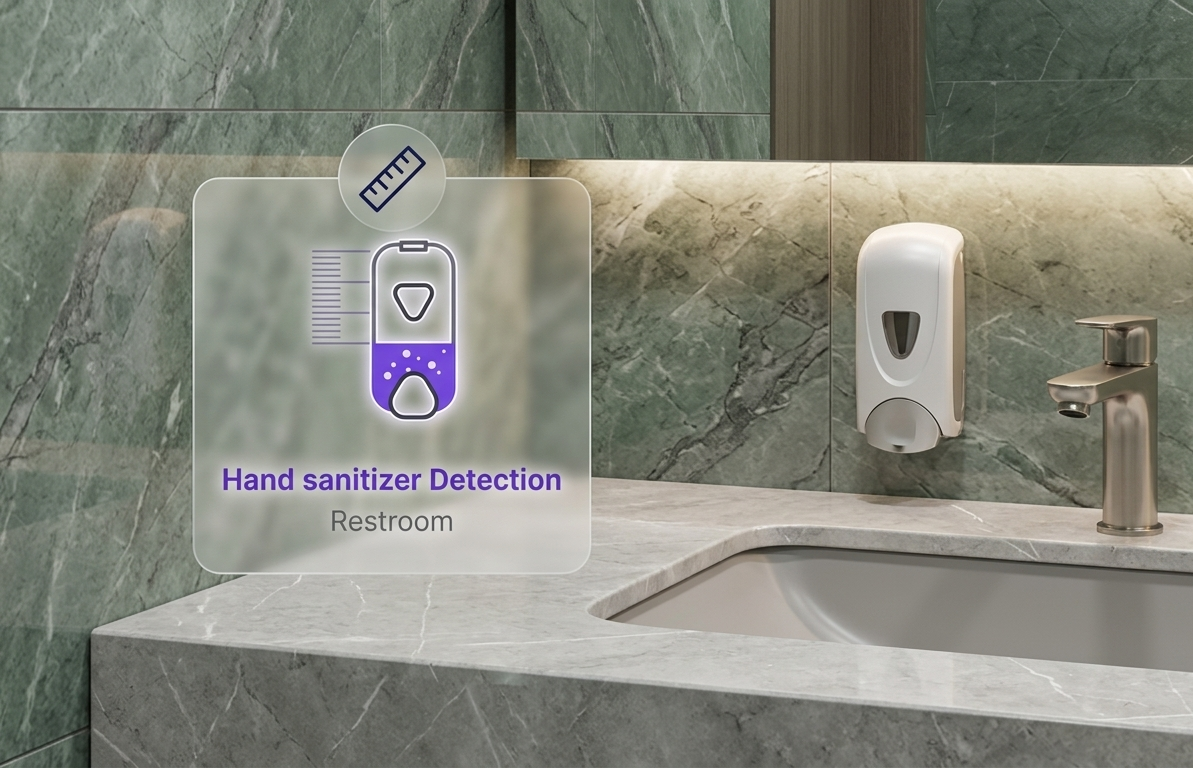
Recall the last time you entered a public restroom, extended your hand to a soap dispenser, and received nothing. While frustrating for users, it poses an even greater headache for facility managers: how to precisely know which dispenser or paper holder is running low without manually dispatching staff to inspect hundreds of points daily.
Traditional maintenance relies on fixed schedules inspecting once in the morning, noon, and afternoon. While logical on paper, real-world demand fluctuates unpredictably. During peak hours, lunch breaks, or major events, foot traffic surges and consumables deplete much faster than anticipated. Consequently, a dispenser filled in the morning may be completely empty by noon, remaining unserviced until the next scheduled cycle.
IKAM introduces a proactive approach: embedding miniature sensors directly inside soap dispensers, paper towel holders, or waste bins. These sensors silently track consumable levels in real time and alert janitorial teams before stock is fully depleted.
While it sounds complex, the underlying principle is straightforward. The sensor emits a micro light pulse and measures the time-of-flight for the signal to bounce back upon hitting the liquid or material surface inside. From this duration, the device accurately computes the remaining distance and available supply.
This light-travel-based measurement, known as Time-of-Flight (ToF) technology, delivers highly stable accuracy regardless of ambient light variations or uneven liquid surfaces. This reliability makes ToF superior to ultrasonic or weight-based sensors, which are often prone to interference in real-world environments.
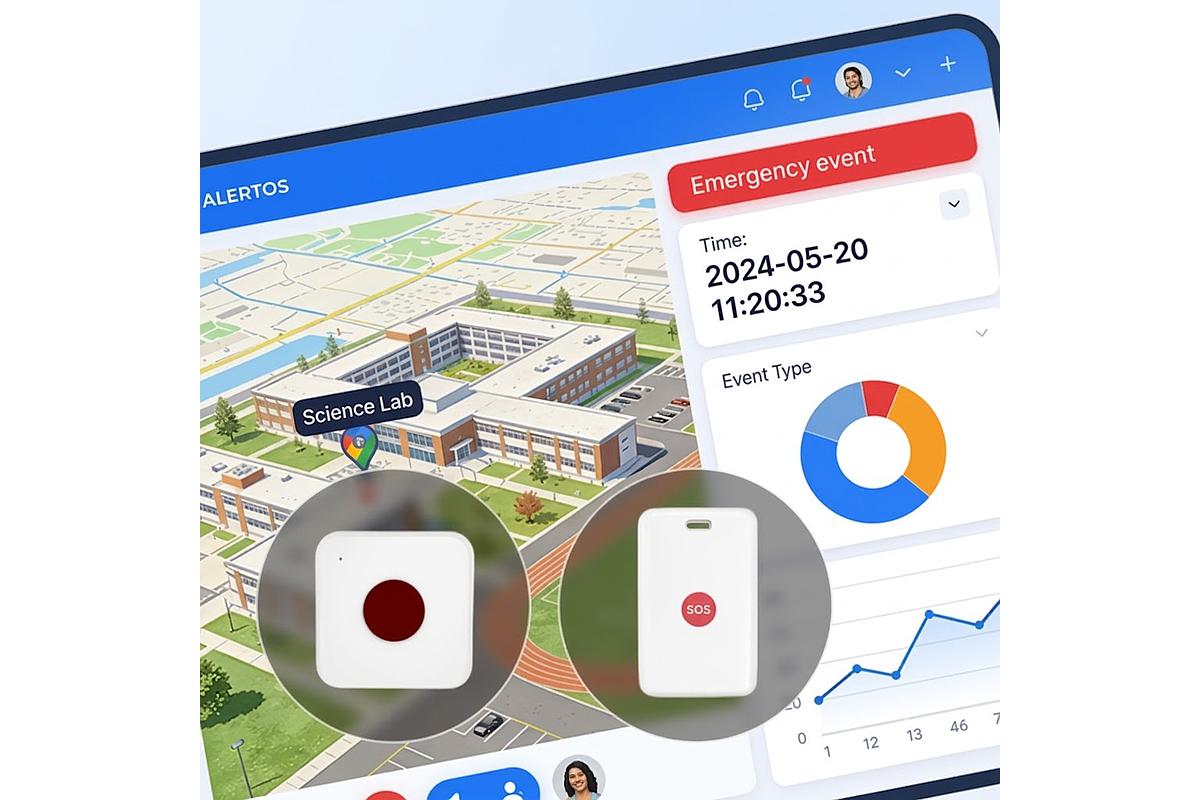
Compact enough to fit inside soap dispensers or paper boxes seamlessly, these devices operate completely unnoticed by end users. Data is continuously relayed to a central gateway and uploaded to the management platform, enabling facility managers to oversee the entire building's status from a single dashboard without physical patrols.
Additionally, by operating periodically rather than continuously, these sensors achieve exceptional energy efficiency, allowing battery lifespans to stretch over several years. For deployments spanning hundreds or thousands of sensors, this drastically minimizes long-term battery maintenance costs.
The true value lies not just in measurement, but in automated responsiveness. When soap or paper levels drop below a pre-configured threshold, automated alerts are dispatched directly to janitorial personnel's mobile devices or desktops eliminating reliance on chance observations.
Over time, accumulated operational data reveals valuable consumption patterns: identifying high-traffic days, peak hours, and zones requiring frequent replenishment. Cleaning and restocking schedules can then be dynamically adapted to actual demand rather than enforcing rigid, one-size-fits-all routines.
From an operational standpoint, facility managers gain three major advantages: reduced manual inspections, elimination of mid-day stockouts, and enhanced end-user satisfaction.
By eliminating redundant patrols to fully stocked facilities, maintenance staff can reallocate labor precisely where replenishment is needed. Labor expenses decrease while service quality a metric typically hard to quantify improves tangibly as peak-hour shortages are virtually eliminated.
Long term, this transition empowers commercial buildings, shopping malls, and industrial parks to shift from experience-driven management to data-driven operations. Operations become scalable and consistent, no longer dependent on individual staff thoroughness.
Level monitoring solutions do not function in isolation. Within IKAM's broader IoT facility management ecosystem, level sensors deploy alongside asset health monitoring, indoor air quality tracking, and water leak detection, consolidating all operational data onto a single platform.
This unified approach allows managers to oversee comprehensive building health from restroom consumables to indoor air quality on a single dashboard, bypassing the need to juggle multiple disparate software applications.
For enterprises aiming to curb operational costs while preserving service excellence amidst labor shortages, smart monitoring represents a high-ROI, long-term investment. Rather than flashy tech, it delivers a pragmatic solution: knowing precisely when and where to replenish supplies before complaints arise.